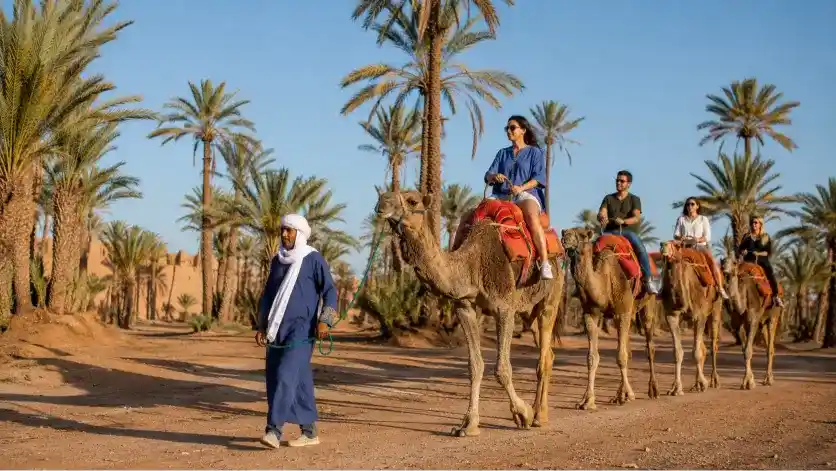
What to Expect From Your First Camel Ride
A camel ride in Marrakech's Palmeraie is one of those experiences that sounds simple but turns out to be surprisingly memorable. The moment the camel rises from its kneeling position — first the back legs, then the front — you understand why this animal has been central to Moroccan culture for thousands of years. It's not just a tourist activity; it's a genuine encounter with the ancient rhythm of desert travel.
Moroccan dromedaries (single-hump camels) are well-suited to carrying passengers. They're sure-footed, gentle by nature when well-trained, and remarkably calm even with inexperienced riders. Our camel handlers have decades of experience, and every rider is led by a guide who walks alongside throughout the experience.
How to Mount and Dismount Safely
The mounting process is the part that surprises most first-time riders. The camel kneels on the ground, and you climb into the saddle from the side. As the camel stands up — back legs first — there's a dramatic lurch forward that catches many riders off guard. The key is to lean back slightly when the back legs rise, then forward as the front legs extend. Your guide will demonstrate this before you mount.
Dismounting is the reverse: the camel kneels front legs first, creating a forward lean, then settles the back legs. Hold the saddle pommel firmly and keep your weight back. Within a few minutes of riding, most people find their natural balance point and begin to relax into the sway.
What to Wear for a Camel Ride
Comfortable, modest clothing is the most practical choice for camel riding. Loose trousers are ideal — they allow freedom of movement and protect the inner legs from the saddle. Avoid shorts, as the saddle edge can cause minor rubbing on bare skin during longer rides. Closed-toe shoes are recommended for safety when mounting and dismounting.
A sun hat or scarf is valuable, as camel rides often take place in open sections of the Palmeraie where shade is limited. Sunscreen is essential even in winter months. On cooler evenings, a light jacket is recommended, as temperatures in the Palmeraie can drop quickly after sunset.
Camel Ride Routes in the Palmeraie
The Palmeraie offers several different camel ride routes, each with its own character. The most popular route follows shaded lanes through the densest section of the palm grove, passing traditional Berber homesteads and small agricultural plots. This route is particularly beautiful in the late afternoon when the light filters through the palm fronds at a low angle.
A second, longer route emerges from the palm grove into more open desert terrain, offering wider views and the opportunity to see the Palmeraie from a higher vantage point. This route is recommended for photography enthusiasts who want more dramatic landscapes.
Is It Ethical to Ride Camels?
This is an important question that responsible travellers rightly ask. At Quad Morocco, our camels are working animals that are cared for by dedicated handlers who have strong traditional knowledge of camel welfare. They are fed, watered and rested according to their needs, and working hours are carefully managed.
Observing your camel before mounting can give you a good sense of their condition. Well-cared-for camels are alert, curious and respond calmly to their handlers. Our animals consistently demonstrate these positive behaviours, and we are transparent about our animal welfare standards with any guest who asks.
Children and Camel Rides
Camel rides are a highlight for most children visiting Marrakech. Children of all ages can ride, though very young children (under 8) should ride in front of an adult. The experience is gentle enough to be completely safe for children, and the excitement on their faces as the camel stands up is something parents remember long after the holiday ends. Our guides are experienced with young riders and take extra care to ensure their comfort and safety throughout.
Ready to book? Our Quad Bike & Camel Ride – Palmeraie is our most popular combination experience.